Services  /  Pharmaceutical & medical-device tox
04 / Pillar

Pharmaceutical & medical-device tox.

PDE and OEL derivation, impurity qualification, nitrosamine risk assessment, extractables and leachables, and ISO 10993-aligned biocompatibility — the same toxicological reasoning applied across drug product, manufacturing exposure and device contact.

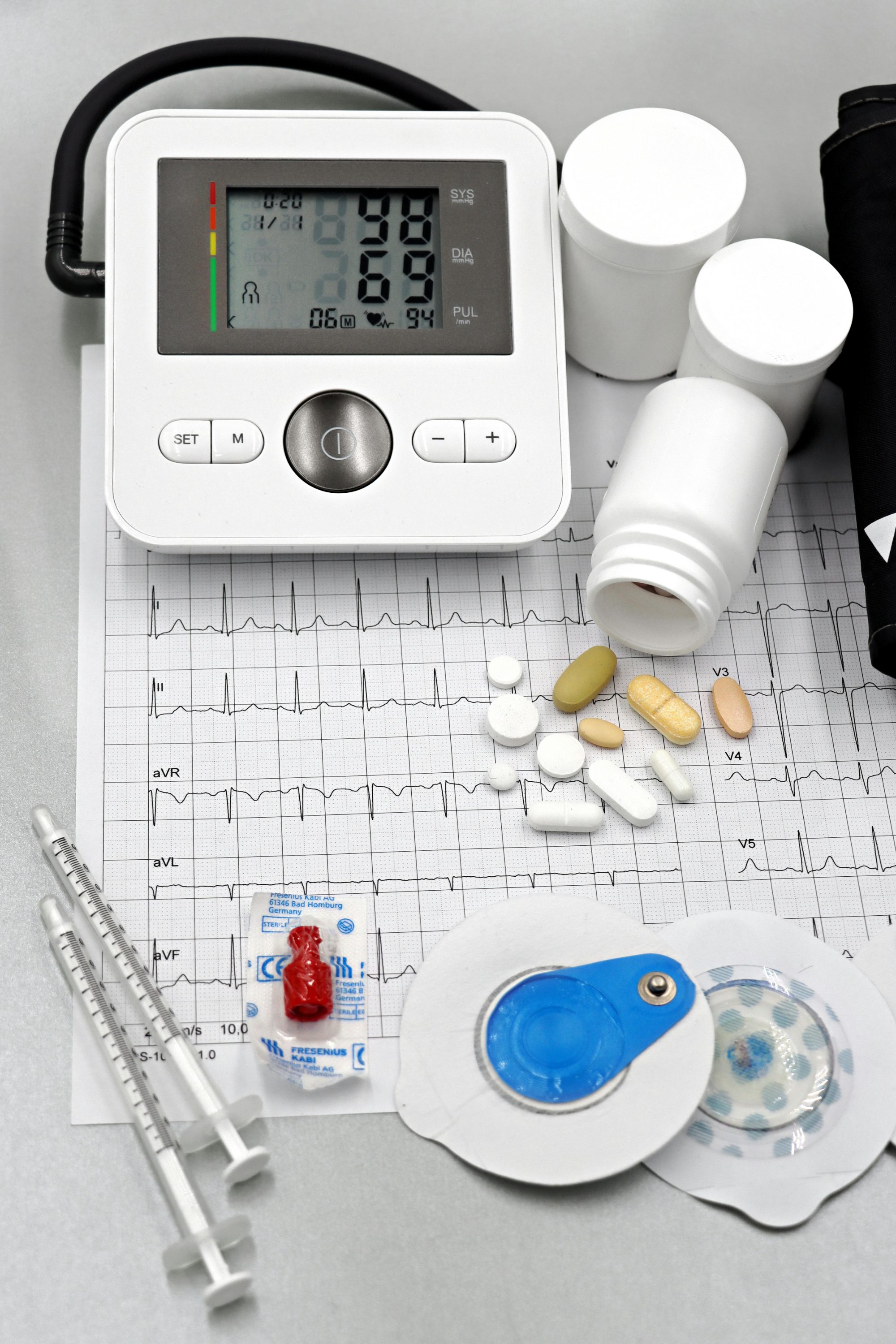
Medical-device biocompatibility under assessment
Frameworks
ICH M7(R2) · Q3A/B/C/D
EMA Q&A · ISO 10993
Domains
Drug product · API
Devices · Combination
Tooling
(Q)SAR · PBPK
USP <1663> / <1664>
Outputs
PDE / ADE monograph
Nitrosamine RA · BER
What we do
Drug, device, manufacturing exposure — one toxicological framework.

Drug-product impurities, manufacturing exposure limits, packaging leachables and device biocompatibility all draw on the same underlying toxicological reasoning — point of departure selection, assessment factor justification, exposure modelling and uncertainty handling. We structure pharmaceutical and device toxicology around that shared scientific foundation, applied consistently across drug, manufacturing and device contexts.

Reviewer question 01
Threshold derivation
Is the PDE or AI traceable from pivotal study to dose, with explicit assessment factor reasoning?
Reviewer question 02
Exposure realism
Is patient exposure modelled at maximum daily dose, maximum duration and worst-case scenario?
Reviewer question 03
Pathway coverage
Are degradation products, leachables, metabolites and impurities covered — not just the parent?
Reviewer question 04
Cross-module consistency
Does the toxicology align with the impurity profile in Module 3, safety findings in Module 5 and nonclinical data in Module 4?
Pharmaceutical product under quality and toxicology review

Drug, device, manufacturing exposure — the same toxicological reasoning, applied at every interface.

ICH M7(R2) · Q3A/B/C/D · ISO 10993 · USP
Scope of support

Where we step in.

From early CMC development through to post-approval lifecycle — concrete points where senior pharmaceutical and device toxicology input shapes the file.

Pharmaceutical product and delivery device under integrated toxicology review

From CMC development to device biocompatibility — one toxicology team across the whole product.

PDE · Nitrosamines · E&L · ISO 10993
01
Shared-facility PDE
PDE derivation per EMA/CHMP/CVMP/SWP/169430/2012 for active substances manufactured in shared facilities — supporting cleaning validation, MACO determination and multi-product facility risk management.
EMA PDE · MACO · shared facilities
02
Occupational exposure limits
Derivation of 8-hour TWA OELs and Occupational Exposure Banding (OEB 1–5) for APIs and intermediates — supporting containment design, PPE selection and occupational risk management.
OEL · OEB · ISPE · TWA
03
Mutagenic impurity assessment
Impurity assessment under ICH M7(R2) — (Q)SAR evaluation, expert mechanistic review, impurity classification (Classes 1–5) and acceptable intake derivation using TTC or compound-specific approaches.
ICH M7(R2) · (Q)SAR · TTC
04
Impurity qualification by read-across
Qualification of impurities where direct toxicology data are absent or limited — read-across to structurally and mechanistically related analogues, (Q)SAR predictions evaluated against OECD validation principles, and structured uncertainty handling.
ICH M7(R2) · (Q)SAR · read-across · EMA reflection paper
05
Nitrosamine risk assessment
Risk assessment, confirmatory testing strategy and AI derivation for known nitrosamines and NDSRIs — including CPCA and compound-specific AI derivation where deviation from CPCA defaults is scientifically justified.
EMA NDSRI Q&A · ICH M7(R2) · CPCA
06
Extractables & leachables
E&L study design, threshold setting (AET, SCT) tied to maximum daily dose and treatment duration, structured identification and prioritisation of unknowns using structural alerts, and patient-exposure assessment for confirmed leachables. Includes elemental impurity assessment under ICH Q3D where relevant, and application of ICH Q3E principles for E&L assessment as the guideline progresses through finalisation.
USP <1663> / <1664> · ICH Q3D · ICH Q3E (draft) · PQRI
07
Medical device biocompatibility
Biological Evaluation Plans and Reports under ISO 10993-1, with chemical characterisation per ISO 10993-18 and toxicological risk assessment per ISO 10993-17 — integrated into MDR Annex I conformity assessment.
ISO 10993-1 / -17 / -18 · MDR Annex I
08
Combination products
Drug-device combination products including pre-filled syringes, autoinjectors and similar formats — with integrated drug and device toxicology under MDR Article 117.
MDR Art. 117 · EMA-MDCG guidance
09
Module 2 nonclinical overview
Nonclinical Overview (M2.4) and Written and Tabulated Summaries (M2.6) drafted to integrate with quality (Module 3) and clinical (Module 5) narratives — with transparent referencing to Module 4 study data.
CTD Module 2 · M2.4 · M2.6
10
Variations & query response
Toxicology support for variations and post-approval changes (new site, supplier change, specification revision), targeted query responses on impurities, PDE / AI derivations or biocompatibility, and toxicology data refresh for renewals where new data have emerged.
EMA RSI · variations · renewals
When clients engage us

What prompts the call.

A pharma toxicology team reviewing an MAA
The first conversation Most engagements begin with one query letter — or a CMO transition where the toxicology file needs reconstruction.

Generic and biosimilar manufacturers facing nitrosamine queries or impurity qualification needs on legacy products. Innovators submitting marketing authorisation applications and needing PDEs, AIs, E&L assessment or read-across-based impurity justifications in parallel. Medical-device manufacturers preparing Biological Evaluation Reports under MDR with chemical characterisation gaps or toxicological risk assessment needs.

Case study

Nitrosamine query at renewal.

Anonymised engagement

A pharmaceutical client identified a novel nitrosamine impurity for which CPCA default classification placed the AI at a level that triggered a regulatory query.

Challenge

A novel nitrosamine impurity, a CPCA default category placing the AI at a level the EMA queried, and a marketing authorisation under active scrutiny.

Approach

  1. 01
    Compound-specific structure-activity review using read-across to closer analogues — surfacing carcinogenicity-relevant evidence the CPCA default did not capture.
  2. 02
    Derivation of a compound-specific AI based on available carcinogenicity data — with point-of-departure and assessment factors documented transparently.
  3. 03
    Detailed justification document supporting deviation from the default CPCA category — aligned to the EMA NDSRI Q&A.
  4. 04
    Engagement support for the EMA Q&A interaction — structured response keyed to each query, anticipating follow-up positions.

Outcome. Compound-specific AI accepted in place of the default CPCA value. Regulatory query addressed with compound-specific justification. Marketing authorisation maintained without dossier revision; framework reusable across the nitrosamine portfolio.

Questions we hear

Five questions, answered straight.

Most pharma / device conversations start in one of these five places. If yours doesn't fit, send it through anyway — we'd rather hear the question than guess at it.

1

Can you derive a PDE from limited data?

Often yes, through read-across from structurally and pharmacologically related compounds, with explicit assessment factor reasoning. Where the data are insufficient to support a defensible PDE, we say so and recommend the targeted study needed to close the gap.

2

How do you handle NDSRIs?

Per the EMA NDSRI Q&A and ICH M7(R2). The starting point is an initial structural assessment — (Q)SAR predictions, structural alert review and expert mechanistic interpretation — to categorise the NDSRI under CPCA. Where the default categorisation is overly conservative for the specific structure and carcinogenicity data on close analogues exist, we derive a compound-specific AI by read-across with transparent uncertainty handling. Where suitable analogues do not exist, we recommend Enhanced Ames testing under EMA-FDA expectations.

3

Can you support ISO 10993 and MDR biological evaluation?

Yes. Biological Evaluation Plans and Reports under ISO 10993-1, with chemical characterisation per ISO 10993-18 and toxicological risk assessment per ISO 10993-17 — integrated into MDR Annex I conformity assessment.

4

How do you scope E&L?

The starting point is the patient exposure scenario: maximum daily dose, route of administration, duration of treatment and patient population. From these, we set the AET and SCT, which together define which extractables and leachables need toxicological evaluation and which can be screened out below threshold. Study design is aligned with USP <1663> for extractables and USP <1664> for leachables, tailored to the specific packaging system, route and dose.

5

Can you respond to a query letter?

Yes. We review the query against the original submission, identify the toxicological reasoning under challenge, and draft a structured response — reinforcing the PDE, AI or biocompatibility argument with additional justification or data integration as needed.

Start the conversation

One product. One molecule. One call.

Tell us the substance, the route and the deadline. We'll come back with an initial scope and a fit assessment.