Services  /  Endocrine assessment
07 / Pillar

Endocrine assessment.

ED criteria assessment under the ECHA-EFSA-JRC joint guidance (2018), weight-of-evidence reasoning that holds under peer review, and mode-of-action analysis for the endocrine designation.

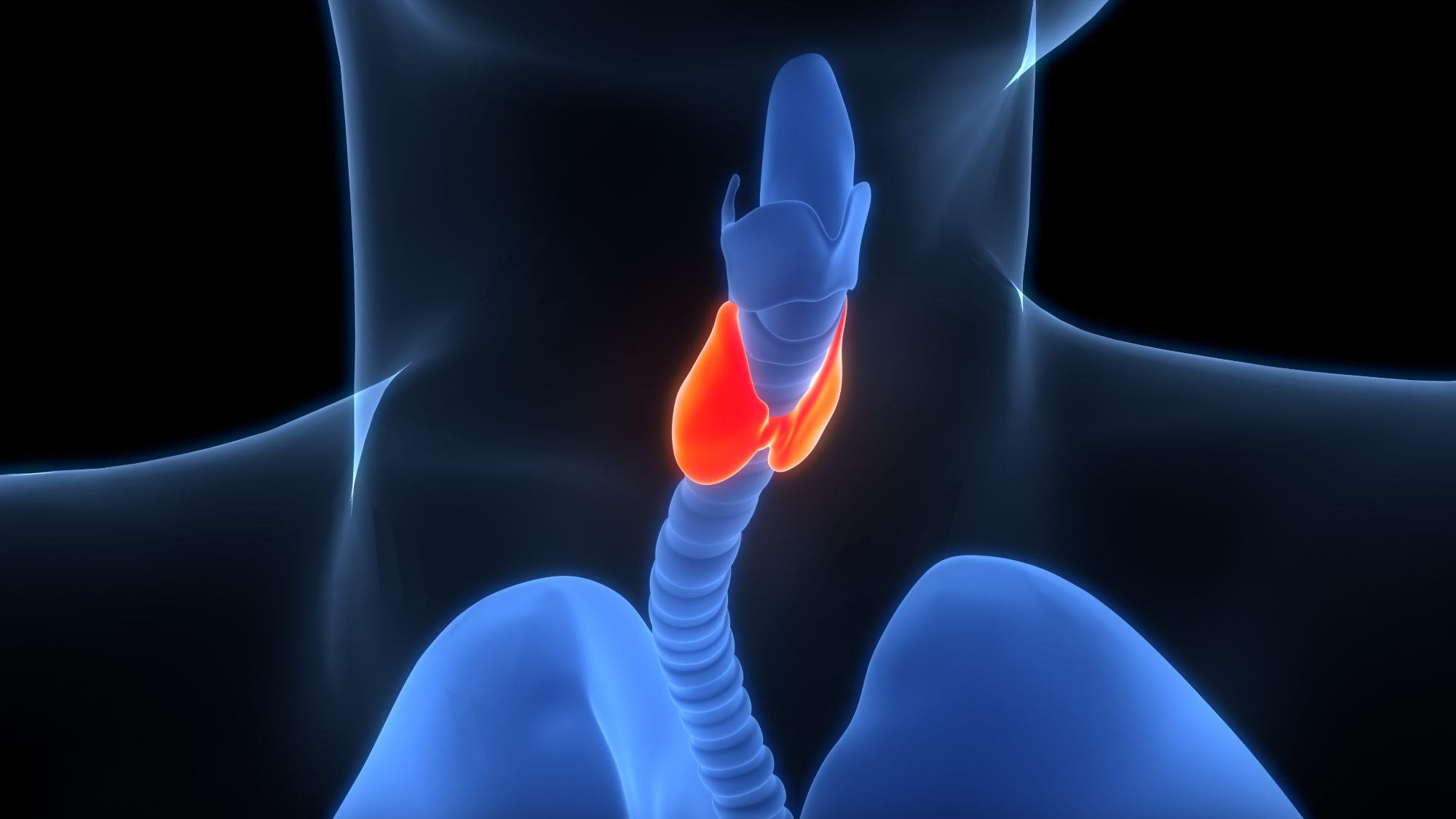
Thyroid hormone visualisation — endocrine assessment
Frameworks
ECHA-EFSA-JRC GD 2018
BPR · PPPR · CLP
Modalities
Estrogen · Androgen
Thyroid · Steroidogenesis
Tooling
OECD CF · AOP-Wiki
IPCS-ILSI HRF
Outputs
EATS WoE dossier
Appendix E · MoA analysis
What we do
An ED file built for evaluator scrutiny.

An ED assessment is judged on three things: whether each line of evidence has been read correctly, whether the WoE integration holds across modalities, and whether the conclusion would survive the alternative reading a reviewing authority could construct from the same dataset. Our work is structured around those three judgements — with lines of evidence, AOP key events and in vivo apical outcomes integrated into a single defensible position, not parallel files.

Reviewer question 01
EATS coverage
Has each EATS modality been addressed with relevant evidence, and is the absence of data on any modality explicitly justified?
Reviewer question 02
Adversity
Is the observed effect population-relevant adversity, or a consequential or adaptive change downstream of a different toxicological pathway?
Reviewer question 03
Biological plausibility
Does the proposed MoA link endocrine activity to adversity in a way that holds against species concordance, dose-response and temporal reasoning?
Reviewer question 04
Alternative interpretation
Has the WoE been tested against the alternative reading an evaluator could make from the same dataset, or has it only been built to support the preferred conclusion?
Neuroendocrine pathway visualisation

EATS modalities, AOP key events, in vivo apical outcomes — integrated into a single defensible position, not parallel files.

ECHA-EFSA GD 2018 · OECD CF · AOP-Wiki · IPCS-ILSI HRF
Scope of support

Where we step in.

Across the ED lifecycle, from early screening through to formal commenting rounds — concrete points where senior endocrine input shapes the file.

Endocrine system structural model

From (Q)SAR screening to EFSA peer review — the same MoA reasoning, applied at every stage.

ECHA-EFSA-JRC GD 2018 · OECD CF · AOP-Wiki
01
Literature & data review
Targeted review of published and unpublished data relevant to endocrine activity and adversity, including critical appraisal of study reliability and relevance. Evidence is organised into structured lines of evidence for downstream WoE integration.
ECHA-EFSA-JRC GD 2018 · ToxRTool · CRED
02
Preliminary screening & gap analysis
Initial assessment of available data against the ED criteria, including identification of data gaps, evaluation of dataset sufficiency for EATS-mediated and EATS-sensitive parameters, and recommendations on next steps or alternative approaches.
(Q)SAR · OECD CF Levels 1–2 · ToxCast
03
Comprehensive ED assessment
Full ED assessment aligned with the ECHA-EFSA-JRC joint guidance, structured around the three core judgements: modality-by-modality evaluation of endocrine activity, reasoning on population-relevant adversity, and mode-of-action analysis establishing the biologically plausible link. Human-relevance reasoning developed using the IPCS-ILSI framework where rodent-specific findings carry the adversity signal. Appendix E and supporting documentation prepared for inclusion in the dRAR.
ECHA-EFSA-JRC GD 2018 · BPR · PPPR · EATS · AOP · IPCS-ILSI HRF · SCHEER 2024 WoE · Appendix E
04
CLP ED hazard classification
Preliminary and detailed ED assessments to support classification under the CLP ED hazard classes (ED HH 1/2 and ED ENV 1/2), including integration of ED conclusions into REACH dossiers, CLH proposals, and hazard communication.
CLP · ED HH 1/2 · ED ENV 1/2
05
Co-formulant ED screening (BPR)
ED screening of co-formulants in biocidal products under CG-50-2022-05 AP 16.6 and the CA-March21-Doc.4.3 procedural flowchart. Database-driven hazard identification, in vitro and in silico data integration, and structured documentation suitable for product authorisation. Where bridging to REACH information applies, the assessment follows the agreed BPR-REACH bridging approach for non-active substances.
CG-50-2022-05 · CA-March21-Doc.4.3 · BPR-REACH bridging
06
Alternative MoA evaluation
Critical assessment of non-endocrine or non-EATS-mediated mechanisms to support differentiation between endocrine-mediated and alternative toxicological pathways, where relevant to the regulatory conclusion.
MoA · non-EATS · differentiation
07
Reporting & response support
Preparation of ED reports and supporting documentation for submission, and response support during member-state and EFSA/ECHA peer-review commenting rounds. Responses tied directly to lines of evidence in the original WoE.
EFSA peer review · MSC · BPC
08
Regulatory & scientific monitoring
Tracking of ED-related regulatory developments, including the evolving BPR Annexes II and III data requirements, CG decisions and emerging guidance, with targeted updates relevant to client substances and product portfolios.
BPR Annex II/III · CG decisions · emerging guidance
When clients engage us

What prompts the call.

An endocrine team reviewing modality evidence
The first conversation Most engagements begin with one modality under question and a procedural clock running.

Active substance registrants preparing ED assessment for approval or renewal under BPR or PPP. Biocide consortia where a co-formulant has been flagged as an ED suspect. REACH registrants requiring CLP ED hazard classification assessment under the new ED HH and ED ENV hazard classes. REACH registrants on a CoRAP list where ED is one of the concerns raised.

Case study

EATS assessment concluding no plausible endocrine link.

Anonymised engagement

An active substance under BPR renewal carried isolated mechanistic signals across two EATS modalities, with apical findings in repeated-dose studies that the previous dossier had framed as endocrine-mediated. The client needed a defensible EATS WoE before peer review, with the MoA position re-examined against current ECHA-EFSA criteria.

Challenge

The substance had positive in vitro receptor interaction findings on the estrogenic axis and a thyroid signal in subchronic studies. Apical reproductive and thyroid-weight findings had been argued in the existing dossier as endocrine-mediated adverse outcomes. Closer reading of the dataset suggested the apical findings were consequential to oxidative stress at systemically toxic doses, but the existing WoE had not separated activity from adversity at the depth required under the 2018 ECHA-EFSA guidance. Peer-review feedback was anticipated to challenge the ED conclusion as under-evidenced in either direction.

Approach

  1. 01
    Reassembled the EATS WoE per modality under the ECHA-EFSA 2018 guidance — estrogenic, androgenic, thyroid and steroidogenesis evidence read against its own dataset rather than collapsed into a single endocrine narrative.
  2. 02
    Separated endocrine activity from endocrine-mediated adversity at each modality. In vitro receptor interaction findings were contextualised against in vivo apical outcomes, with explicit reasoning on whether downstream key events of an endocrine MoA were demonstrated.
  3. 03
    Conducted structured MoA analysis against the modified Bradford-Hill criteria, examining temporal concordance, dose-response, biological plausibility and specificity. The analysis demonstrated that apical reproductive and thyroid findings occurred only at doses with concurrent markers of oxidative stress and systemic toxicity, and were not accompanied by the histopathological signature of endocrine perturbation.
  4. 04
    Documented the alternative oxidative stress MoA with supporting evidence on lipid peroxidation markers, antioxidant depletion in target organs and dose-response concordance with the apical findings. WoE conclusion: receptor-level endocrine activity was present but not translated into population-relevant adverse outcomes via a biologically plausible endocrine pathway; the apical findings were better explained by oxidative stress at systemically toxic doses. Appendix E was prepared with each modality argued against the joint guidance criteria.

Outcome. A full EATS WoE dossier concluding that the substance did not meet the ED criteria, with the conclusion supported by modality-by-modality reasoning, structured MoA analysis and documentation of the alternative oxidative stress pathway. The dossier was structured to anticipate peer-review questions on each pillar, with responses tied to specific lines of evidence rather than narrative restatement.

Questions we hear

Five questions, answered straight.

Most ED conversations start in one of these five places. If yours doesn't fit, send it through anyway — we'd rather hear the question than guess at it.

1

When is a substance considered an ED under the criteria?

When the data show an adverse effect, an endocrine mode of action, and a biologically plausible link between them — with the adversity considered population-relevant. The dossier needs explicit reasoning on each of those three pillars, per modality. Our role is to make sure each pillar is argued at the depth the evaluating authority will read it at.

2

How do you handle a thyroid signal in rodents?

We anchor the MoA to a defined AOP where one is available, apply the IPCS-ILSI human-relevance framework, and develop species-specific reasoning on the kinetic and metabolic determinants — UDP-glucuronosyltransferase activity, half-life and binding-globulin profile being the typical decision points. The strength of the argument depends on the underlying data; our role is to make sure the available evidence is integrated in a way that holds.

3

Can you screen co-formulants for ED activity?

Yes. We screen co-formulants under CG-50-2022-05 AP 16.6 and the CA-March21-Doc.4.3 flowchart, using (Q)SAR predictions, available in vitro data and read-across. Where the co-formulant is also a REACH-registered substance, the screening leverages existing REACH data with documented justification of relevance. The output is a structured screening report suitable for regulatory submission.

4

An EFSA peer-review comment challenged our ED conclusion. What now?

We review the comment against the original WoE, identify the modality and pillar under question, and reinforce the argument with mechanistic, kinetic or species-relevance evidence. The response is structured within the procedural commenting clock and tied directly to lines of evidence in the original dossier.

5

Can you build the EATS WoE dossier from scratch?

Yes. We deliver the full EATS WoE dossier under the ECHA-EFSA 2018 guidance — structured per modality, with explicit reasoning on adversity, endocrine activity and biological plausibility, and Appendix E prepared for inclusion in the dRAR.

Start the conversation

The substance, the modality, the clock.

Tell us the substance, the modality and the regulatory clock. We'll come back with an initial scope and a fit assessment.